The cryptocurrency industry is entering a new phase of institutional transformation. In a recent analysis, Paul Barron, the well-known YouTuber and crypto market analyst, examined Google Cloud’s strategic move into digital asset custody, an initiative that could reshape the relationship between traditional banking and the blockchain ecosystem. With a commercial launch expected in early 2027, the proposal raises a fundamental question: Is this a security solution designed to accelerate institutional adoption, or a new way for major corporations to concentrate control over tokenized assets?
Google MPC: Institutional Security and the Role of Solana
Google Cloud’s initiative is based on multi-party computation (MPC), a cryptographic technology that distributes key operations across multiple environments to reduce the risk of a single vulnerability exposing private keys. Combined with Google Confidential Space, it enables operations to run in isolated environments while introducing additional controls before transactions are authorized.
One of the most significant aspects of the initiative is Alphabet’s relationship with Solana and Ethereum. According to reports surrounding the project, the company already uses MPC technology to protect its own digital assets on both networks. This positions Solana among the blockchain infrastructures that could benefit from growing institutional interest, although it does not mean Google has exclusively selected that network.
The technology aims to eliminate single points of failure by distributing cryptographic control and enforcing authorization rules. However, it does not eliminate every security risk. Compromised credentials, operational errors, and fraudulently authorized transactions remain potential threats. The real test will come when the system moves beyond private testing and into large-scale commercial use.
Crypto Theft and the Urgent Need for Better Security
The push to improve custody has a measurable foundation. In its 2025 Crypto Crime Report, Chainalysis estimated that approximately $2.2 billion worth of cryptocurrency was stolen during 2024. Private key compromises accounted for 43.8% of the total value stolen, highlighting the importance of protecting access mechanisms for digital assets.
Attacks against major platforms have also demonstrated that sophisticated infrastructure does not eliminate risk. In February 2025, the attack against Bybit resulted in losses of approximately $1.5 billion. The incident highlighted how even advanced custody systems can be compromised when authorization processes fail or third-party components are manipulated.
In this context, Google’s proposal addresses a genuine market need: providing tools that reduce dependence on a single key or device. Nevertheless, these incidents do not prove that self-custody is always less secure or that corporate custody necessarily offers superior protection. Trust must be supported by independent audits, operational transparency, and clear accountability mechanisms.
Meanwhile, quantum computing and artificial intelligence-powered attacks are increasingly prominent in discussions about future cybersecurity. However, there is insufficient evidence to conclude that Google developed its initiative as a direct response to an imminent quantum threat. It is essential to distinguish documented technological risks from speculation about corporate motives.
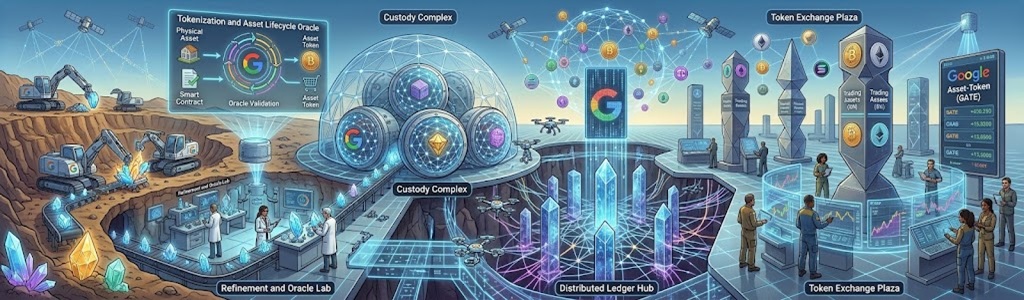
Tokenization and the Battle for Financial Control
The expansion of institutional custody coincides with concrete developments in the tokenization of traditional assets. On October 28, 2026, the Depository Trust & Clearing Corporation (DTCC) announced the launch of its tokenization service for eligible US securities. The initiative covers qualifying Russell 1000 stocks, certain exchange-traded funds, and US Treasury securities within a regulated framework. Further details are available in the official DTCC announcement.
Robinhood has also expanded into this market by offering tokens linked to US stocks and ETFs to European users, with certain products available for trading 24 hours a day, five days a week. The company announced the initiative in June 2025 in its official press release.
However, it is essential to distinguish between a token that legally represents a share and one that provides economic exposure linked to that share. Investor rights depend on the product’s legal structure and contractual terms. The US Securities and Exchange Commission (SEC) has emphasized the importance of regulatory obligations applicable to tokenized securities.
This is where the paradox highlighted by Paul Barron emerges: while major technology companies and financial institutions develop tools to facilitate access to digital assets, they may also retain control over custody, transaction authorization, and trading channels. Tokenization does not necessarily mean decentralization; it can modernize traditional markets without removing their intermediaries.
Final Reflection: Who Will Control the Future of Trust?
Google’s entry into institutional custody, alongside DTCC’s progress and other financial industry initiatives, demonstrates that the integration of blockchain with traditional finance is deepening. The challenge is no longer simply to process transactions faster, but to determine who controls the assets, who bears responsibility when something goes wrong, and what protections investors retain.
As Paul Barron’s analysis suggests, the defining battle may unfold between the promise of a more open financial infrastructure and corporations’ desire to maintain control over their systems. Nevertheless, it would be premature to conclude that a deliberate strategy exists to undermine self-custody or monopolize tokenization.
The decisive question is whether these solutions can deliver verifiable security, transparency, and meaningful choices for users. Ultimately, the future of cryptocurrency will depend not only on who holds the keys, but also on who has the power to decide how those assets can be used.
Disclaimer: This article has been written for informational purposes only. It should not be taken as investment advice under any circumstances. Before making any investment in the crypto market, do your own research.